On my daily scour of the Interweb for the cheapest HTC Desire price I’ve come across the cheapest so far – £368.77!
It’s from Kikatek.com and if you pre-order the phone using your Visa Debit card you get the phone for £368.77. If you use any other card you’ll have to pay £370.62 (for some reason) which is still £17 cheaper than the previous cheapest price.
I’ve never personally heard of Kikatek.com but their Google Shop rating is nearly 5/5.
Question: Lg Chocolate-BL20V SLIDE 3G-13000
Htc touch VIVA-11000
samsung star 3g-10000
Answer: here is the full specifications and evaluations of them:
Answer: No one know for sure, the only thing you can do is wait and see, but most of the popular phones do drop 50% of it's original price after 1-2 years of release.
Source(s):
blogger at http://www.HTCHD2Forum.com
HTC HD2 holds a conventional PPC standard shape. The large screen of 4.3-inch WVGA allows the users to surf the internet facilities or watch any kind of videos with a good visual sense.
The keyboard design of HTC HD2 is rounded of the predecessor of effective keys, the users are benefited by the increase of the practical physical buttons to five.
HTC Touch GD2 machine has grown in the field of entertaining with the rich resource of third party, the extension of powerful capabilities and the windows mobile 6.5 OS.
Overall speed of the machine is assured by the hardware with 1 GHz frequency processor Qualcomm Snapdragon with 512MB ROM memory and 448MB RAM. A camera of 5 million pixels with the auto focus facility is build by the handset.
Do you remember the Commodore Amiga? If so, you should be old enough to remember Cannon Fodder – a game by Sensible Software which was published by Virgin Interactive (God that’s going back a bit – 1993 to be precise). Well anyway, my point is, Droid Gamers have uploaded an article about an exciting new game that has appeared on the Marketplace:
The game is called Defend Homeland and closely resembles the Cannon Fodder / Command & Conquer style gameplay of combat simulation. Be sure to check out the Droid Gamers article for more info and take a look at the video below.
Google have recently released their first ever mobile phone is the United States called the Nexus One. This handset was manufactured by HTC, who have produced the majority of the Android handsets on the market to date. A interesting fact, is that the Nexus One is still to appear on the UK market, yet HTC have gone ahead and released their own in house version called the HTC Desire and have tweaked it slightly – for the better. If you who think this handset looks familiar, apart from being a Nexus look a like, it was previously give the codename Bravo and appeared on several well-known phone blogs.
The Desire is a smartphone handset which will be running on the very latest version of the Android Operating System – V2.1 As well as to the updated OS, this handset will also feature HTC Sense user interface, which didn’t work that well in the past, but has been getting better in recent releases. HTC has got rid of the trackball cursor control found on most Android handsets, including the Nexus One. This has been replaced with Optical pad. There are good and bad points to both trackball and pad, so will have to see if this is a significant difference or not.
HTC Sense will grab your contacts updates from Facebook and Twitter and add them inside your contacts list. You will also be able to add and view live feed updates to your accounts from your phone, send snap shots and pictures to your Flickr account and move around several applications at the same time thanks to the 1GHz processor used for this phone.
The impressively fast 1GHz Snapdragon processor, which has been used in the Nexus One will guarantee that the phone can handle the stress that running multiple applications This processor is much faster than what the Apple iPhone and will be enough to stop the phone from crashing, freezing and losing your data. This is aided by the 576MB RAM found on the Desire, compare to just 512MB on the Nexus One.
It terms of the screen on the HTC Desire, you will be getting a 3.7 inch Amoled touchscreen which will use the capacitive technology (made famous by the iPhone) that allows for multi-touch and pinch to zoom features. Capacitive technology, seems to be the way ahead for advanced smartphones and I think that HTC have managed to integrate this perfectly in the Desire. The Amoled part of the technology will make the display screen really clear to view, with out putting a drain the battery.
The features for multimedia fan are nothing spectacular, it comes with a 5MP cameras, HSDPA and Wi-Fi connectivity, GPS and memory up to 32GB. One thing it does have over the Nexus one is a FM radio, but this is something the Google might add on to their next software update.
Overall, there are only minor differences between the two phones. One major point, if you are in the UK, is that the HTC Desire is available now and the Google Nexus One has yet to be released. Users will have to wait and see what the price difference will be when both handsets are on the market. I am guessing more people might be tempted by the Nexus One because it has the Google name to it.
Question: I'm interested in getting some feedback about the Samsung Moment and the HTC Hero.
Would a few of you guys out there tell me your pros and cons about these phones?
Thanks in advance.
Answer: Both the smartphones you've mentioned are equally capable devices but the HTC Hero is the better phone overall, in my opinion. Not only the Hero is, shall we say, more aesthetic & appealing in design than the Moment but also screams out quality. Though the Samsung Moment has a slide-out QWERTY keyboard & a fabulous AMOLED display, the HTC Hero steps up to the challenge armed with a 5 MP autofocus camera & an intuitive trackball for easy navigation. Moreover the HTC Hero is more feature rich with perks such as a digital compass & multi-touch interface thrown in. Both the phones run on Google's Android. If you texting is in your blood then I suggest you go for the Moment. If you think you can do without the physical keyboard, then trust me, the HTC Hero won't disappoint.
According to one researcher @ Panda Security, upon attaching an HTC Phone to her PC, she found that the phone was pre-loaded with the Mariposa bot client. Mariposa has been in the news of late thanks to some arrests connected to the operation of the botnet.
Security researchers have found that Vodafone, one of the world’s larger wireless providers, is distributing some HTC phones with malware pre-installed on them. – Threat Post
Read Threat Posts original story for more details…
A new theory about why Apple decided to take HTC — and indirectly, Google — to court
Photo: Apple Inc.
Two thirds of the way through a 3,000-word essay on This Apple-HTC Patent Thing, Daring Fireball’s John Gruber quotes a tweet by John Siracusa that gets to the heart of the matter:
“To me, the Apple patent suit smells like nothing more than a manifestation of Jobs’s own sense of injustice.”
In the context of Gruber’s essay — a passionate and thoroughly readable diatribe about why the software patent system is broken — the quote rings true.
Apple (AAPL), like most large tech companies, uses the system primarily for defensive purposes. They amass a portfolio of broadly worded patents to be unleashed, like nuclear warheads, on any company that dares take them to court — as Nokia did last October (see here).
What’s different about the suits Apple filed Tuesday is that they amounted to a first strike — something Apple hasn’t done in patent court, as far as anybody can remember, since Apple vs. Microsoft, the famous court battle over the Macintosh “look and feel” that Apple ultimately lost.
That case, although it was filed in 1988, when Jobs was nowhere near Apple, may be a telling precedent. Like Microsoft’s (MSFT) Windows, the Google (GOOG) Android operating system that runs most of the HTC smartphones in Apple’s complaints is self-evidently built on the shoulders of Cupertino’s designers and software engineers.
Jobs, Gruber suggests, is not so much worried about HTC’s products as offended by them. He quotes Apple’s Tuesday press release:
“We can sit by and watch competitors steal our patented inventions, or we can do something about it. We’ve decided to do something about it,” said Steve Jobs, Apple’s CEO. “We think competition is healthy, but competitors should create their own original technology, not steal ours.”
“That’s not the language of a licensing dispute or the beginning of a polite negotiation,” writes Gruber. “That’s the language of a man aggrieved.”
It’s easy to understand Jobs’ indignation, especially in light of the damage Windows inflicted on the Mac’s market share. But the problem for Steve Jobs is that everybody in the world of modern software — including Apple — “steals” (to use his verb) from everybody else.
Gizmodo on Tuesday dragged out the clip (posted below) from the 1996 PBS documentary “Triumph of the Nerds” in which Jobs quotes Picasso’s “good artists copy, great artists steal” and adds, about Apple: “We have always been shameless about stealing great ideas.”
By launching a nuclear first strike against HTC, Apple seems to be coming very close to the dark side. Gruber quotes an open letter to Jobs posted by Mac developer Will Shipley:
“If Apple becomes a company that uses its might to quash competition instead of using its brains, it’s going to find the brainiest people will slowly stop working there. You know this, you watched it happen at Microsoft.”
“Apple is inching ever closer to evil,” writes Y Combinator’s Paul Graham, using the word in Google’s low-bar “Don’t be evil” sense, “and I worry that there’s no one within the company who can stand up to Jobs and tell him so.”
Gruber won’t call Apple “evil,” but concludes by saying he’s right there with Graham in that sentiment.
“And I say this not in any sort of hippy-dippy sense of expecting or even hoping for Apple to behave selflessly, holding them to a separate idealistic standard, or expecting them to fight with one arm tied behind their corporate back. And only a fool would argue that a company should never seek redress through litigation.
“But I believe that it’s good business, in the long run, for a company’s acts of aggression to take place in the market, not in the courts.”
Gruber’s essay is available here. For people who care about the issues raised by the Apple-HTC lawsuit, it’s a must-read.
By David Goldman, staff writerMarch 4, 2010: 11:14 AM ET NEW YORK (CNNMoney.com) — Let the smartphone smackdown begin.
In the blue corner, wearing black, weighing in at 4.8 ounces, the 31-month champion of the touch screen phones: Apple’s iPhone!
In the red corner is the challenger, appearing on every carrier, a new entrant to the heavy-weight battle: Google’s Android!
It doesn’t take Michael Buffer’s “let’s get ready to rumble” introduction to know that Apple and Google are squaring off for what looks to be an epic battle of the smartphone platforms. Apple made that loud and clear on Tuesday when it announced it would sue HTC, the maker of the Nexus One “Google phone,” over 20 alleged patent violations.
Experts say Apple is an aging champion that is feeling threatened by the momentum surrounding new-to-the-game Google’s Android platform.
Steve Jobs: A man aggrieved “Apple set the bar and now it’s being toppled,” said Will Stofega, program director of mobile device technology and trends at IDC. “Apple is playing defense, and Google is playing offense.”
Although it may seem that Google (GOOG, Fortune 500) and Apple (AAPL, Fortune 500) are the only contenders battling it out in the U.S. smartphone market, that’s simply not true. In fact, neither is even the largest.
That “biggest” award goes to BlackBerry maker Research In Motion (RIMM), which commands 41.6% of the market, according to technology data tracker comScore. Apple’s iPhone OS is is second place with 25.3%, and phones that run Google’s Android operating system are in fifth with 5.2% of the market.
Battle for the data belt But there is an all-important metric that sets Android and iPhone OS apart from the competition: data. Heaps and heaps of data.
The iPhone, iPod Touch and the handful of smartphones that run Android accounted for a whopping 86% of the data downloads from U.S. smartphones in January, according to a recent study by Web advertising company AdMob. IPhone OS downloads accounted for 47% of the data requests across the nation, and Android accounted for 39%.
That’s important for consumers, because it means they’re getting more functionality out of iPhones and Android-based phones, which is, after all, the point of getting a smartphone. Those phones give users a seamless, computer-like browsing experience, and they offer by far the most apps.
The iPhone App Store has more than 100,000 apps. Google’s Android Market has 20,000. The next biggest competitor is RIM with several thousand and Palm’s (PALM) WebOS just crossed the 1,000-app threshold.
It’s not just size that counts, it’s how you use it: iPhone and Android users download an average of just under 9 apps per month, according to AdMob. The next largest contingent is Palm, which sees an average of 5.7 apps per month downloaded.
“People are more engaged with their iPhones and Android phones due to the browsing experience,” said Soumen Ganguly, principal at tech consultancy Altman Vilandrie & Co. “That’s where BlackBerry generally lags by quite a bit.”
Data usage also gives Google and Apple an edge over the competition, because more data usage means more revenue. Apple takes a 30% cut from the apps that it sells, and Google makes money when people search on Google or visit Web sites that feature ads supported by Google.
It may be too soon to count out any of the smartphone players just yet, given how quickly new technologies develop. RIM recently said that it planned to improve its browser functionality and Microsoft (MSFT, Fortune 500) wowed spectators with its Windows Phone 7, which is set to be unveiled this fall.
But some say it’s Android and iPhone OS, more than any other smartphone platform, that are making the greatest strides in the race to be market leader.
“Looking to the future, it is primarily between Google and Apple to shape the future of the mobile industry,” said Jagdish Rebello, principal analyst of communication systems at iSuppli Corp. “When you look at what Google and Apple are doing with applications and creating an ecosystem … others are just playing catch-up.”
Blow by blow Google and Apple have taken very different approaches to the battle. Here’s a look at how that bout is playing out:
Apps: Apple is winning the app war now, with about five times more apps than Google. But app developers have to get their products cleared by Apple’s standards police (remember the 6,000 sexy apps that got purged last week?) before they can appear in the App store. That’s a process that can take months.
Google has taken the opposite approach, opening its platform to developers. IDC’s Stofega says that developers are embracing Google’s approach, and as Android adoption grows, more developers are writing Android apps. That could bring some of the higher-quality apps to Google’s side. Google has a lot of ground to cover, but app war may just be beginning.
Devices and prices: IPhone OS runs on three devices: the iPhone 3G S, the iPhone 3G and the iPod Touch, with prices ranging from $99 to $299 with a new contract.
Android is currently available thorugh three carriers on on 10 smartphones in the U.S., with prices ranging between $79 to $199 with a new contract. It also runs on a number of other devices, including several netbooks and the Barnes & Noble Nook e-reader.
6 ways iPhone and Android differ ISuppli’s Rebello said Google’s strategy of offering Android on more phones, with more carriers and varying price points was the same winning strategy for RIM’s BlackBerry devices.
“Apple has a confrontational ‘our way or the highway’ strategy, but it’s the Google model that’s winning over carriers,” he said.
Availability: The iPhone is available exclusively on AT&T (T, Fortune 500) in the United States, and there have been well-documented problems with how that partnership has negatively impacted many customers’ experiences.
Google is carrier agnostic and, unlike Apple, allows wireless companies to take a cut in the app revenues. As a result, wireless companies are embracing Android. The only major U.S. carrier without an Android phone is currently AT&T, but the wireless company just announced it will begin to sell five Android phones by June.
“Google’s strategy isn’t about keeping one carrier happy but about enabling mobility, hardware and software to a variety of different tiers,” said Stofega. “There are advantages to serving a number of different masters, and that’s where Apple has some problems.”
excerpt from http://www.wired.com/threatlevel/2010/03/source-code-hacks/
Hackers who breached Google and other companies in January targeted source-code management systems, security firm McAfee asserted Wednesday. They manipulated a little-known trove of security flaws that would allow easy unauthorized access to the intellectual property the system is meant to protect.
The software-management systems, widely used at businesses unaware that the holes exist, were exploited by the Aurora hackers in a way that would have enabled them to siphon source code, as well as modify it to make customers of the software vulnerable to attack. It’s akin to making yourself a set of keys in advance for locks that are going to be sold far and wide.
According to the paper, the hackers gained access to software-configuration management systems (SCM), which could have allowed them to steal proprietary source code or surreptitiously make changes to the code that could seep undetected into commercial versions of the company’s product. Stealing the code would allow attackers to examine the source code for vulnerabilities, in order to develop exploits to attack customers who use the software, such as Adobe Reader, for example.
Apple vs HTC IPR suit : http://arstechnica.com/apple/news/2010/03/apple-vs-htc-a-proxy-fight-over-android-could-last-years.ars
a roundup from the highly flammable comments section:
How’s the quote go? “Good artists create, grate artists steal” Sucks for you Mr. Jobs. It’s like APPL vs. MSFT all over again. Mr. Jobs should of learned the first time this happened, he let Mr. Schmidt get too close and bam! What do you know all of a sudden you have a cheaper comparable product that anyone can build on and improve upon. How Mr. Jobs didn’t see this coming again in perplexing to me.All in all aside with the snarky comment, this move reeks of fear. Maybe apple just realized that they can’t compete with a ton of open source dev’s backed by google. Not to mention the hardware side where you have several manufactures cranking out several phones a piece with prices ranging from dirt cheap ($50 to buy a new droid these days) to cheaper then the iphone. All of them with more or less the same capability, some of them much more. Mark my words, android will slowly destroy the head start that apple has with the iPhone and overtake them unless apple come up with some real reason to stay in their closed more expensive eco-system.
—
Even as a loyal Apple customer I am not sure that I like their approach. One question I have is whether there is a fine line in between defending a patent and an anti-trust lawsuit?
—
Its all about the iTunes Money!
Okay, we’ve all heard the news that Apple has opened a multi-patent (20 of them) lawsuit against mobile handset maker HTC. HTC is a mobile computing and cellular handset maker and subcontractor that makes quite a few handsets that run Android and Windows Mobile. They either make them and sell them themselves, or they’re subcontracted out by Google, Microsoft and various mobile carriers to design handsets. The company also creates custom skins and interfaces for Android and Windows Mobile that can better fit the overall design of the different handsets.The company is based in Taiwan and has been around since 1997.
Now, looking at the list of patents that aren’t in legalese or engineer-ese, some are quite laughable at best. It seems Apple invented and holds patents for ‘Object Oriented Operating Systems’, Touch Based Gestures that Unlock Mobile Communication Devices’, and even ‘Programming a CPU to Interact With an Operating System for Battery Saving Measures’. Further reading also indicated that Apple claims invention of ‘Multi-Touch’, ‘Phone CPU Undervolting’, ‘Large On-Screen Fisher Price Colored Icons’, and even ‘Applications and the Online Mobile Only Store That Sells Them’. So they’re suing HTC to stop Google’s Android and Microsoft’s Windows Mobile sales because they touch things too.
Pretty laughable to say the least. A few of the patents are even from 1995! If memory serves me correctly; Xerox invented the object oriented operating system with interactive icons back in the early and mid 1970s. And a company called Palm was working on a touch and gesture mobile device in 1995 and it was called the Palm. And Apple in the early and mid 80s tried suing Microsoft for copying its ‘Object Oriented Operating System’. Apple lost that one and software patents have been of dubiousness since then. Heck, Windows Mobile had touch screen and touch gesture capability before the first iPhone was a rumor and HTC and Toshiba made the handsets.
It is somewhat surprising that Apple received some of the patents in question, such as the patent on “Conserving Power By Reducing Voltage Supplied To An Instruction-Processing Portion Of A Processor”. When you really look at it (and show it to a licensed electrician), the patent basically is talking about saving power by supplying less voltage to a circuit and switching circuits on and off to do so. That’s obviously been done before (prior art), but its a given by the laws of nature (power = current * voltage). If that’s patentable, the concept of die shrinks and Moore’s Law should be patentable, overclocking and underclocking would be patentable, and a whole host of other things made possible by laws of nature, physics, and thermodynamics should be patentable as well.
I’m no patent lawyer and looking through the technical details of a good portion of these patents made my head hurt. I know my computer history very well, know the ins and outs of various operating systems from the last 20 years, and I know my way around all sorts of hardware.
So what’s really going on here? Why go after just HTC? They just make the handsets and a few modifications to the Android and Windows Mobile operating systems. There’s lots of other mobile handsets and a couple of other touch screen operating systems.
I think I know what’s going on here and it has nothing to do about patents.
It has everything to do with the iTunes revenue stream and walled garden that Apple has created. Its all about the money!
Let’s put technical and patent talk away now. When Apple released and made the iTunes Store, they created a massive revenue stream that included music, movies, tv shows, and apps for all their mobile devices (iPod, iPhone, and all things iTouchy). While Apple’s markup on their hardware sales (40% in most cases) is the highest in the industry, its all the deals they made with the entertainment industry to make content available to thier mobile portfolio that’s got Apple rolling in dough. And allowing developers to create applications for their mobile things also had Apple making dump trucks worth of cash from the cut they were taking in sales.
So to put it simply, anything associated with iTunes, including keeping all the hardware tied to it, is making Apple loads and piles of money. Follow me? Good.
Apple has already shown displeasure at the various music labels and tv and movie studios for double dipping and selling and licensing the same content on not only iTunes, but also Amazon, Pandora, MySpace, YouTube, their own respective sites, and Hulu. And those various companies have acquiescenced to Apple in some cases, but have also complained about Apple’s wall garden mentality of iTunes and iDevices only. Many developers are also taking their apps and either developing them for Windows Mobile and Android as well or they’ve moved past the iDevice App Store because of Apple’s sporadic, draconian, and inept App Store policies.
Still doesn’t explain the whole patent thing, right? But I am giving you a direction to think in. By suing HTC, Apple hopes to put a big stop to handset development in the Android and WinMo spaces. And to send a shot across the bow of Microsoft and Google, however indirectly that may be. Suing Google and or Microsoft would be suicide for Apple. They’d get squashed.
There’s one company that hasn’t been mentioned in this dispute. But they have been mentioned in another dispute with Apple’s mobile iTouchy devices. Its Adobe and their Flash platform.
We all know what Flash is. Its the video technology behind YouTube and all those TV shows and movies you watch on Hulu or CBS’s or NBC’s website. Its the games you play like Bejeweled and Collapse. Or how’s about all those games you play on Facebook like Farmville and Mafia Wars? Many business websites use Flash for their front end (UPS and Fedex off the top of my head).
That’s a lot of content that’s available on the Flash platform, and Adobe has a massive developer network that has been creating and developing with Flash and its development suite for years. They’re very close to releasing Flash 10.1 for quite a bevy of mobile devices which include Windows Mobile, Android, Zune, Blackberry, Nokia (Symbian and Maemo) and a few others (which will use Flash Lite). That’s alot of movies, music, tv shows, apps, and games that will be available for free or through other paid services on quite a large number of mobile devices.
Well, all except Apple’s mobile iTouch devices that is.
See, there’s that whole iTunes wall garden compound of Apple’s that contains most of Apple’s revenue stream. And Apple is scared. For the first time in a number of years, Apple has some serious competition to the iTunes hardware, software, and content ecosystem. There’s the Android OS and it’s App Market. The Windows Mobile 7 Series, its Windows Mobile Marketplace, the Zune players and the Zune Marketplace (and the availability of Xbox Live content too). Nokia’s handsets and its Symbian and Maemo OSes with the Ovi Store. And pretty soon Adobe’s going to enter the fray with Flash content on all those devices and operating systems. Even a mobile version of Mozilla’s Firefox browser is on the way and all the respective application plug-ins that come with that framework.
That’s a lot of competition for Apple on the hardware, software, web, and content front. And a direct threat to the iTunes walled garden revenue stream. So what does Apple do? It takes a bunch of its patents, even the old pre-return of Steve Jobs, and files a patent lawsuit in the hopes to at least stall the development and release of all that competition. Its that plain and simple. Apple has $40 billion in the bank and no debt. A patent lawsuit as a stalling tactic is a drop in the bucket for them; money-wise at least anyways.
Remember the tepid reaction to the iPad when it was revealed? Apple was just as surprised to the tepid reaction people were tepid to the product reveal. From showing off a giant iPhone that still used AT&T’s 3G data network, to showing off the so called full featured internet functions (with 1/4 of the NY Times webpage missing due to not including Flash), to Steve Jobs calling Flash buggy and dying technology and Adobe’s developers as lazy, and not to mention all the missing print content publishers who won’t release their content because of Apple’s diehard insistence to be keymaster and gatekeeper to all things App Store and its content. Even the games shown off weren’t all that impressive.
But by filling a stalling patent lawsuit, Apple hopes to hold off this onslaught of hardware and content competition and find a way to shore up its own revenue generating ecosystem to avoid another tepid reaction when the next iPhone is revealed.
Steve Job’s comments about Adobe and its developers really got Adobe sharpening its swords for a fight. They rallied the troops and partnered up with most of the big mobile players. They’re unleashing the ‘lazy’ developers, the ‘buggy’ Flash platform, and all that cross device content to as many mobile systems as possible.
I’ve been using my Motorola Droid for a week now and I’m amazed with everything I can do, how its done, and customize my handset to my liking. The screen is gorgeous and pretty soon I’ll be checking out a few Hulu shows, checking out a few upcoming video game trailers in HD Flash, and playing a few free games like Bejeweled and Collapse.
That type of freedom from all sorts of different sources and devices is what scares Apple most. They as a company have never truly competed outside of their walled compound. Its always been about only their hardware, their software, their content, and only the applications and content they allow in on their terms and conditions. Apple used to be the trendsetter, the innovator, the ‘Think Different’ crowd. Now they find themselves in a position they haven’t been in in years; playing catch up. They got complacent, greedy, and egotistical. And they’re going to pay for it.
—
You don’t seem to understand the patents. Apple did not patent launching a phone or a smartphone or an internet-enabled device or a touch screen internet enabled smartphone or a device built from common parts. Apple patented how very important parts of the iPhone did its magic. Bad people steal Apple magic. Apple fight bad people.
—
I’m not sure what you mean by technology? Above you talk about touch screens, ARM processors and 3G and you can’t patent hardware choices. What Apple patented was methods of users interfacing with the phone (which when the iPhone was introduced was close to revolutionary) and the ways in which its technology actually worked.
Things like the unlock-gesture are relatively minor patents but we’ve had touch screen technology for about 20 years in PDAs and I’ve never seen such a simple method to unlock a device before. It’s quick, simple and intuitive, it may well have taken Apple a lot of work to get there and that’s why it was patented. The simplest things can be very, very difficult to develop. Obviousness is something that often only comes with hindsight.
—
Historically this could be an interesting development. As people have noted, a lot of these dubious patents have being kept in reserve as a defense mechanism. Suddenly (at least in the mobile space) these patents are coming out of the woodwork in a potential tech Armageddon. No one believes it will come to that, but obviously some sort of a power struggle or reshuffle is occurring.
Apple obviously believes it will benefit from an industry wide IP shakeup. How realistic is that. How many enemies will they make doing so. Perhaps the earlier RIM patent case has given them reasons for optimism. However unlike the RIM patents, Apple has a real business to defend from counter attacks.
This does not look like business as usual where large patent holding business diligently circle the wagons and avoid each other. Apple is casting itself as the outside aggressor, saying it stands above them. This could get messy.
—
Isn’t this really about how the Internet market for information will be defined? Apple is pushing a Pay-For model, and Google is pushing a Paid-By-Advertizing model. Apple has world dominance over distribution of music, smart phone apps, and is trying for world dominance over “printed” material with iPad. Google has world dominance over distribution of Web searches, maps, and air-borne and space imagery.
Isn’t the patent issue just a vehicle for disrupting Google’s progress while Apple advances?
—
Reminds me of the time that Apple took Microsoft to court for stealing the idea of having a Garbage can icon. Apple had to know they would win that one (perhaps they did it just for the PR). In this case Apple is claiming a patent violation on the idea of scaling back the CPU voltage when the device is not in use. For an encore I’ll bet they will try to place a patent on the use of electrons.
Question: I was just on their website looking at their new phones, and they didn't say what service provider goes along with the phone. I know the Hero is for AT&T, but it didn't say that when I was on the site. I looked at everything, including specs, and it said nothing about what cellphone service it used. Does that mean they're all available for any service?
Answer: Likely not. In the USA, two systems are used for mobile phone, CDMA (Sprint, Verizon), and GSM (AT&T, T-Mobile). It is rare one phone would do both. At most they may make separate GSM and CDMA versions of a phone.
I spent my journey home from MWC this year reminiscing about the old days of 3GSM, when handset vendor innovation equalled upping megapixelage, and launching new products basically involved rehashing a former best seller but slightly updating the form factor, and blowing the R&D budget on expensive brand consultants to come up with a CRZY name!
Those days are gone my friends, and it was never more obvious than at MWC 2010. Nokia were conspicuous by their absence from hall 8, presumably hiding away in a hotel somewhere licking their wounds and plotting their revenge. Whilst Apple was expectedly absent, and therefore deliberately inconspicuous – save for the fact 80% of visitors these days have iPhones.
That latter fact was one Google seemed anxious to change, largely by handing out Nexus Ones like branded breath mints. Your correspondent sadly missed that particular boat, but he did manage to get some branded breath mints. Of course, keen to be seen as an earlier adopter, he was already a proud owner of Google’s first branded toy anyway, and has seen the benefits of outsourcing management of his social affairs to a 3rd party specialist first hand.
Adobe were keen to demo flash 10.1 running on the N1 (and various other devices), and it seems increasingly obvious that N1 owners are going to seize the Look at What My Phone Can Do That Yours Can’t bragging rights that iPhone owners have lovingly hogged for so long.
So this is what innovation looks like at MWC10: rather than presenting over equipped, over designed feature phones, incrementally more expensive and packing in more and more unwanted services, they now have to change your life, and do it more radically, and with more simplicity, elegance and ease of use than anything else out there.
So the challenges for the industry are now different – rather than fretting about ASP and ARPU, the concerns are things like STAYING IN BUSINESS, or avoiding becoming a data pipe for Google/Apple. But there’s more, the 3G networks are starting to look horribly inadequate for the purposes of delivering always on internet to everyone all the time, and LTE is still a spot on the horizon.
Furthermore, over the past few years smartphones have embarked on a borg-like assimilation of all consumer electronics products – digital cameras, calculators, MP3 players, sat nav, email/web surfing devices etc, etc. Eric Schmidt noted in his MWC keynote that smartphone sales will overtake desktop PC sales within 3 years. So the mobile phone revolution becomes the Everything Mobile revolution.
What was clear from MWC10 is that the march of the mobile handset has taken it far beyond the borders envisaged by the telecommunications industry, or even the PC industry – Bill Gates recently noted that Microsoft weren’t ambitious enough in their plans for Winmob.
Given all of that, one wonders whether the GSMA (given that it’s a group comprised of old guard Telco’s pushing vested interests) will be able to continue delivering a relevant convention to address this new converged Everything Mobile world. Or, like seemingly everything else in tech – will the action all relocate to San Francisco?
Question: I have a HTC G1, running android os 1.5. I would like to root it so i can run android 2.01, is it a bad idea to? It crashes all the time and i need the extra power from the 2.01 upgrade. thanks
Answer: As long as you know what u are doing it will make your G1 a better phone. Just be sure you follow the steps accordingly.
Source(s):
Www.bestandroiddeals.com
I Barcelona frra veckan blev det allts officiellt uttalat att det har slppts ytterligare en uppdatering till nuvarande Windows Phone 6.5. Detta har av naturliga skl inte ftt s stort genomslag i pressen dr allt fokus har legat p nya Windows Phone 7 Series som kommer i hst – mumma.
Den nya uppdateringen av Windows Phone 6.5 bjuder bland annat p fljande:
Uppdaterad grnssnitt som nu ntligen r pekvnligt nda ner i botten. Ikoner har ersatt textmenyer och det r smidigt att svepa sig fram mellan svl menyer som olika applikationer. Startmenyn r ocks ndrad till att bli “drag and drop” s att du fr alla appar precis dr du vill ha dom.
Bttre prestanda i Internet Explorer
Std fr kapacitiva skrmar och multitouch (kom frst med HTC HD2 i en specialversion)
Ny uppdaterad Windows Live klient samt Office 2010 – najs!
Alla ny Windows Phone 6.5 telefoner som slpps frn nu kommer att anvnda sig av denna version som tex nylanserande HTC HD Mini och Garmin Asus M10. Nr det gller telefoner som redan finns p marknaden gller som vanligt att kolla med tillverkaren om det kommer att slppas en uppdatering fr telefonen. Bda telefonerna nedan r riktigt lckra och som det ser ut kommer priset fr Garmin Asus M10 att bli svrslaget – den kommer nmligen med fulla Europakartor och bilhllare och jag skulle tro att priset hamnar ngonstans p 3000-3500 kronor.
Ls ven andra bloggares sikter om Windows Phone, Garmin, Asus, HTC HD Mini, Garmin M10
To say I’m suffering from Android (s goog) overload is an understatement. I’m simply trying to keep up with the Nexus One developments, but other devices are in the headlines too. And some of them aren’t even Android devices — but they could be. Android Community notes the effort to bring Android 2.1 to a handful of Windows Mobile handsets. All of the four devices are made by HTC, but they’re not the latest and greatest. I’m talking about the Tilt / Kaiser, Touch / Vogue, Touch Dual /Niki and Touch Cruise / Polaris. Some of these phones are two years old so they don’t have the latest and greatest hardware. The HTC Touch, for example, only has a 201 MHz CPU, so I’m amazed it can handle Google’s latest mobile platform.
Of course, “handle” is a relative term — if you go this route, don’t expect everything to work. I’m already reading about some hardware challenges like no camera or bluetooth support just yet. Often times, these ROMs make progress one slow painful step at a time, so a fair amount of patience is a pre-requisite. But if you have one of these devices sitting around just taking up space, this could be a fun project and offer exposure to Android at the same time. Would I take the plunge if I used one of these Windows Mobile (s msft) phones on a regular basis? Not a chance. I would consider it, however, if I’ve already replaced these devices with another primary handset. It certainly wouldn’t offer stellar performance when compared to devices of today, but would provide the chance to expand mobile platform horizons.
Note that you don’t have to completely wipe Windows Mobile from your device. There are a few dual-boot solutions out there — HaRET, being one — that can run Android right from an SD card in your handset. Here’s a timely example of that method with Android 2.1 running on the HTC Niki.
Image Credit: Hack A Day
Related research on GigaOM Pro (sub req’d):
As Windows Mobile Stumbles, Which Smartphone OS Will Seize the Lead?
Question: The Nokia N900 or the HTC Desire?
Answer: I have a Google Nexus One (which is basically the same as a HTC Desire, except for some OS modifications) and recently a friend of mine bought an N900. I played around with it, and I must honestly say that i was not impressed,big, bulky and made of cheap plastic with a last gen screen type that is not sensitive enough. While the N1 is sleek and has much better build quality and i believe the OS (Android) is much more fluid and natural than the confusing (maemo) of the N900.
I must say though that the N1 is a bit slippery in the hand, and its internal memory (about a gig) (but memory card can be added) is quite dissapointing compared to the 32 gig of the N900.
Both are great phones...but for totally different people...i say the HTC Desire is the better choice.
Source(s):
Experience
Question: can someone please help me and tell me how to download themes and to put them onto my htc touch pro?? and are there any good sites?
thanx
Answer: theres a program called WisBar for the Touch Pro that allows themes. I got mine to look EXACTLY like Windows7...right down to thstart menu etc.
Source(s):
smartphone addict and member of http://www.ppcgeeks.com
I’m just testing to see if it works. It is truly an amazing device. Sometimes I wish that the games were better but then it isn’t a gaming device – it’s a phone. However, my mother has an ipod touch and the games on there are much better. Those same games are available for the iPhone. We will have to wait and see if Android developers will rise to the level of iPhone developers.
I do have to say kudos to Glu Mobile for their game Bonsai Blast. I have played Zuma in the past and never got into it but wow Bonsai Blast is fun! I’m not sure if it is because of the touch screen or because of the special balls and the walls or because I’m playing it on my phone. My favorite part of the game is it is free! I can’t believe the whole game is free. I expected it to be just a demo but nope it’s the whole thing.
In conclusion, Android is a wonderful platform and I would recommend it to my own family members. The iPhone, however, is still better due to the apps. So if you had a choice I would recommend them in this order:
1. IPhone
2. HTC Android phone with HTC sense
3. Non-HTC Android phone
4. Blackberry or Windows mobile
Above I mentioned HTC sense. What is that? Well it takes your twitter, Facebook, and Flickr information, contacts, pictures, etc. And incorporates it into your contact list. HTC also adds quite a few awesome widgets (mini-apps you can put on your home screen) and takes a lot of the standard Android apps and makes them much prettier. They also re-did the keyboard so now it is almost as good as the iPhone’s.
Well thanks for reading. Please share your thoughts below.
Put mobiles before PCs, says Google’s Schmidt: In a wide-ranging keynote address at Mobile World Congress on Tuesday, Google CEO Eric Schmidt, pictured, defended the company against accusations from mobile operators that it wants to turn them into “dumb pipes” (see next item), suggested that Google’s future lay in mobile devices more than in computers tethered to desktops, and touted Adobe Flash support in mobile devices running the company’s Android operating system.
Vodafone warns of Google dominance: Vittorio Colao, CEO of Vodafone, the world’s second-largest cellphone group by subscriber numbers, used a stage at Mobile World Congress to warn of Google’s growing dominance in Web search and advertising and suggested regulators should intervene to prevent the company from becoming a monopoly. “From a policy perspective, this should be looked into,” he said. “We need to ensure choice and avoid concentration before it’s too late.”
Ericsson demos 1Gbit/s LTE: Swedish telecommunications equipment manufacturer Ericsson has demonstrated a fourth-generation Long-Term Evolution (LTE) network at Mobile World Congress able to download data at 1Gbit/s. To date, Ericsson has signed commercial LTE contracts with five major global operators; AT&T in the US, Verizon in the US, TeliaSonera in Norway and Sweden, MetroPCS in the US and DoCoMo in Japan. For the demonstration, Ericsson used four carriers of 20MHz each. Motorola, meanwhile, announced that it had won a contract to build Saudi Arabia’s first LTE network. At the same time, Ericsson CEO Hans Vestberg has predicted there will be 50m connected devices by 2020.
Symbian Foundation shows off new OS: The Symbian Foundation, which develops the Symbian operating system for mobile phones used by Nokia and other handset manufacterers has been demonstrating its Symbian 3 platform at Mobile World Congress. It’s the first fully open-source version of the popular handset software. “Now that it is fully open source, the door is open to individual contributors, device creators and third-party developer companies, as well as other organisations, to create more compelling products and services,” a Symbian spokesman said. Symbian 3 will include support for multi-touch finger gestures, 3D acceleration and HDMI, needed to connect handsets to high-definition screens.
HTC takes the wraps off Legend: Taiwanese handset manufacturer HTC has announced three new handsets at this year’s Mobile World Congress, but it’s the Legend, which runs the latest version of the open-source Android operating system, that is stealing most of the attention. Analysts say the single-block aluminium phone could give Apple’s iPhone a run for its money. The Legend has a bright 3,2-inch LED display and, despite the unibody design, includes a user-removable battery, unlike the iPhone. The Legend is expected to go on sale in April. The two other handsets announced by HTC are the Desire, which has also been garnering a fair amount of attention for its large 3,7-inch screen, and the Bravo.
Question: right now i have a g1 and im not a big fan of it and i kinda hate it, i dont know why but i dont like android so much but ill use it if i get another phone that has it. i wanna choose between the palm pre plus, motorola devour, HTC HD2, motorola droid,HTC touch pro 2, im leaning toward the first 3 but i would get any of these.
Answer: I suggest HTC HD2, if you have enough money
We’ve seen all manner of phones controlling robots, cars and helicopters, but a HTC Hero operating a Lego Mindstorms robot? Awesome. It works via a purpose-built app which uses the Hero’s accelerometer, connecting to the ‘bot over Wi-Fi. It’s from the creative minds at Swedish tech company ENEA, who created the app to harness the Hero’s accelerometer to control the Mindstorms bot. Normally such a relationship between a controller and robot would be over Bluetooth, but ENEA was forced to use Wi-Fi due to the “limited Bluetooth support in Android OS version 1.5 (not supporting the Bluetooth serial port profile, SPP)”. It’s not the best quality, but do check out the video below for a glimpse at the Hero getting all domineering on a little LEGO creature. [ENEA via Recombu]
Sorry I can't provide you with the directory (you'll find this on the website) or price, getting around in KL is not my strongest point and also I wouldn't know a HTC HD2 even if it was waving its backside at me...
Question: Why dose my clock on my HTC Tilt 2 show the incorrect time when I first go to home screen and then automatically change to the correct time? And how do I remove items off the Start Screen?
Answer: 1. That's normal operation. It does not update while it isn't displaying and then it "catches up" when you display it again.
2. You would need to delete the .lnk files in the \Window\Start Menu\Programs\ folder.
HTC is the world’s fourth largest smartphone company. It ships 80% of all Windows Mobile and probably a similar proportion of Android devices. Like Microsoft in 2003, Google turned to HTC for its first smartphone, the G1 and its latest, the co-branded Nexus One. The company shipped a total of 11.7 million mobile phones in 2009.
It would appear that HTC is very well positioned in what amounts to be the best industry in technology.
However, not all is well. A few days ago HTC issued revenue guidance below analyst estimates and its stock price is at 2005 levels, 70% off its peak (see graph–source: Google finance).
Part of this could be explained by its continuing reliance on Windows Mobile which is fading fast, but also it’s because, as management acknowledged, there is significant price pressure.
HTC prides itself with having a “premier” product with typically high-end feature sets and positioning. HTC invested in its own UI to differentiate its products and has mounted a branding campaign to move away from being a white-label ODM.
It seems all for nought. The rules of the smartphone market do not favor modular component players. As HTC does not front its own OS, it still struggles to stand out in the eyes of the consumer.
Looking at the list of top 3 vendors: Nokia, RIM and Apple, we see hardware companies that field an integrated OS/service bundle.
The HTC hero is easily one of the best new phones out on the market now. Not only that, but it has the power to take away from the market share of the iPhone. With the power of the Android operating system, and the innovation of HTC, there is a whole lot going on under the surface here that makes this phone a heavy contender in the smart-phone market today. Granted this phone, as any, comes with its own bracket of shortcomings, they can be easily overlooked in just how much of a role this phone can play in your life. With that said, the first thing you need to take into account when entering the Smartphone market is price, and the Hero backed by Sprint is easily the best bang for your buck. For $69.99 a month you get unlimited data, unlimited text, unlimited mobile to mobile, and 450 minutes you will use if you ever call a landline. The service is right up there with AT&T and Verizon, better than AT&T some would say, and goes to show how much the other two are going through to rip the consumer off.
Enough about the service though, lets move onto the phone. One of the first things you will notice about the Hero is it shares its touchscreen with a trackball and button alternative. This is one of the best features because it is nice to have a hardwired option to contrast those precise touch operations. Its as fun using the trackball to navigate your phone as it is to us your finger, plus it takes less effort. After unlocking the phone and getting to the Home page, another fun feature is the load of Widgets that HTC has unloaded into this phone. the HTC Sense is a great featured theme with a lovely looking interface, and plenty of useful and intuitive apps and widgets. Another thing you will love over Apples operating system is that android has its own Widgets that drastically increase the functionality of your phone. Like the Palm Pre, you can multi-task on up to six applications at a time, and switch between them just by holding down the home button.
You can voice search through Google or Yellowpages, or use the Layar app to turn your camera into a device that will locate anything from Papa Johns to Walgreenz and display them in a 360 degree fashion that correlates to your GPS location. Just stand and turn in one spot and you will see the location of all the businesses that surround you as you turn.
Along with a great look and feel, the Hero also touts one of the best cameras in a smartphone available now. At 5MP and a video option, all of your (daytime) shots will look sharp, and feel great. The shots can be uploaded to almost any online service you would want, right through Android.
The only downfalls this phone has is its battery life, with a supposed talk time talk time up to 420 minutes and standby time of up to 750 hours, this doesn’t take into account all of the apps and widgets you may have running at one time. This is where a good Task Manager, like Advanced Task Killer will come into play. Keeping an eye on whats running on your phone at any point in time is a nice feature, and will reduce the demand on your phones battery. The only other issue is the lag that can come with a device that can handle so much. Once you hit the android marketplace and start downloaded all types of apps, you may start to notice a lag in your phones general operation. Once again, be sure to utilize the task manager to help keep unnecessary apps in their place, and keep your hero running nice and smooth.
All in all, the Hero is an easy buy to suggest. With all of the other options around, you can’t get any more bang for your buck than you can with this phone. Between offering a multi-touch feature, and mobile widgets and applications, you will love this phone from the moment you wake up, till the moment you place it to charge overnight.
As usual Apple likes to convey the image it is number one, even if it is clearly not, and so Apple chief Steve Jobs has lately come out swinging , reacting to the release of Google’s Nexus One, which has apparently angered him by being now fairly cool, and by actually having a decent reception – unlike a certain apple iPad. Google” “They entered the phone business. Make no mistake they want to kill the iPhone. We won’t let them. This don’t be evil crap: It’s bullshit.” yeah and ‘How dare someone else try and sell a phone’” especialy a very decent one . http://thenonconformer.wordpress.com/2010/01/11/the-best-iphone-to-buy-or-to-use/
The new iPad would not display videos, animations or any other features created using Flash, a type of multimedia software made by Adobe. Flash is one of the world’s most prolific applications, appearing on 98 percent of all computers. YouTube videos run on it. It is what animates millions of graphics and advertisements on Web sites around the world. Adobe says the technology supports nearly 75 percent of video on the Web and 70 percent of online gaming sites. The same Jobs once again threw a couple of insults against Adove too. “They (Adobe) have all this potential to do interesting things but they just refuse to do it. They don’t do anything with the approaches that Apple is taking, like Carbon. Apple does not support Flash because it is so buggy”, he is reported as saying. “Whenever a Mac crashes more often than not it’s because of Flash. No one will be using Flash”. Sadly there are constant updates required for Adobe flash, which do slow down your computer if you do not install them too..
Its my first decent post in this new year,I think.Actually its well into year 2010(kinda has a ring to it,doesnt it?Twenty-Ten.),far enough that all the ‘new year’ fuss has died away.Infact even the fuss about the ‘new year fuss’ has withered to dust. And here I am back from my self imposed exile from the world wide web.Actually my pc,and my pda both died(gremlins?)and pure laziness prevented me from getting off my backside and doing anything about the pc and my phone took a long time getting fixed(more on that and the HTC mass failing issue in some later post.Maybe.) Well,all that’s over now,so hope to keep writing in more regularly. Now I’ll get back to what I was doing. Studying.Trying to,actually….
A spokes person from Walmart has come out and flat out denied that Walmart will be carrying the Nexus One. Does this mean the specs we saw on that page are incorrect as well? I don’t know about you guys, but that would stink if this was all a huge mistake. Below is a statement from Walmart’s Spokesman Ravi Jariwala:
“Due to a technical error, this item erroneously was displayed on our site. We’re working with our partner Let’s Talk to have it removed as quickly as possible. We have no plans to carry Nexus One in Walmart stores or online at Walmart.com at this time.”
Question: I've had this phone for 2 days and i'm not sure how everything works. But I am seeing new symbols appear in the top tool bar. Example: an @ symbol and a check mark icon. I just wanna know what they mean or how to get rid of them.
Answer: those are notifications, you can see them in detail, if you hit the menu button while you are in the home screen, then the list of notifications show up, you can delete them if you like.
Source(s):
http://www.Droid-Eris.com
Che dire di questo smartphone? Le recensioni abbondano sul web, su quello che a dire di molto,e pure mio, è il miglior avversario dell’ iPhone di Apple.
Solo leggendo le specifiche tecniche me ne sono innamorato…poi a vedere il suo prezzo 530 dollari della versione sbloccata (370 euro) contro i quasi settecento dell’iPhone, che seppure ha 32 gb di memoria integrata, la mia follia mi è sembrata meno folle.
Per il momento come ben sapete è in vendita online solo in america e in gran bretagna… in italia verrà distribuito da Vodafone che probabilmente, come al solito, alzerà i prezzi della versione “unlocked”.
Nonostante tutto il mercato sembra non aver reagito positivamente alle attese, infatti nella prima settimana di vendite si registrano 20.000 vendite di Nexus One contro il milione e seicentomila di quelli dell’iPhone, sarà per colpa della strategia di marketing di Google, sarà il periodo post natalizio.
Io intanto rimango a sognare, e a risparmiare per l’eventuale acquisto.
Google’s Android is an operating system like Windows 7 or Mac OS X but for your cellphone. Their are many phones that run this operating system in the USA just look for the “with Google”. The screen may look different but its all the same thing.
USA Devices
T-mobile G1 (T-mobile) $99.99
MyTouch 3G (T-Mobile) $149.99
Motorola Cliq (T-Mobile) $99.99
Samsung Behold 2 (T-Mobile) $149.99
HTC Hero (Sprint) $179.99
Samsung Moment (Sprint) $179.99
Motorola Droid (Verizon Wireless) $149.99
Droid Eris (Verizon Wireless) $79.99
All of those devices runs Google Android and have Wi-Fi. The operating systems features a touch screen, the Android Marketplace with is just like the Apple iPhone Application Store but less applications.
When using one of these devices it acts like a Windows computer with an application launcher, desktop style interface, widgets, and there is even a task manger for applications. The interface on the iPhone is more user friendly for people using a smartphone for the first time. Here is an example of the interface.
NEWS
Complaints rolling in about Google Nexus One By Priya Ganapati
January 14, 2010 12:04 p.m. EST
(Wired) — Google’s Nexus One phone may have been one of the most anticipated devices of the last few weeks. But since the smartphone’s launch last Tuesday, it has left a string of unhappy customers in its wake.
Nexus One has been plagued by consumer complaints including spotty 3G connectivity, a high early termination fee, poor customer support from Google and problems with the touchscreen.
“There are some aspects of the experience that Google didn’t think through as carefully as they should have,” says Charles Golvin, an analyst with Forrester Research. “This has implications for the store they have launched and their future ambitions for it. Google, clearly, has a lot of work ahead of it.”
Google introduced the Nexus One as the first device to be sold by the search company itself, rather than a manufacturing or carrier partner. The Nexus One, which runs Android 2.1, has been designed by HTC and works with T-Mobile’s network in the United States.
But contrary to initial speculation, the device isn’t free. It will retail for $180 with a 2-year contract with T-Mobile. An unlocked version is also available for $530 — a price similar to most other smartphones — and that version will work on other GSM phone networks worldwide as well as AT&T in the United States, although with some limitations.
The difference, though, is the Nexus One is available only through Google’s online store. Unlike with a Motorola Cliq or a HTC G1, users can’t walk into a T-Mobile store and buy the Nexus One.
They can’t even count on T-Mobile’s customer service representatives in store or the company’s phone support to solve their problems.
It’s a strategy that has backfired on Google. The company’s support forums are full of customer complaints around the Nexus and the company’s poor service.
“A lot of complaints and frustration that people are expressing would normally be handled by going back into the store or by calling the support help line,” says Golvin. “Having a physical location where you can take your phone back helps customers and Google seems to have underestimated that.”
“Solving customer support issues is extremely important to us, because we want people to have a positive Nexus One experience,” says a Google spokesperson. “We are trying to be as open and transparent as possible through our online customer help forums.”
Many of the customer complaints are centered about the device’s inability to connect to T-Mobile’s 3G network. The Nexus One does not pick up the 3G network or keeps switching to the slower EDGE network, say some users.
A Google spokesperson says the company is aware of the problem. “We are aware of the issues that have affected a small number of users and are working quickly to fix any problems,” the spokesperson told Wired.com in an email. “We hope to have more information soon. When we do, we will post it to the user forum.”
Add to all this Google’s decision to charge a separate early termination fee in addition to the one charged by T-Mobile. Nexus One customers who bought the subsidized, $180 version and then decide to cancel their contracts will have to pay $200 to T-Mobile.
But Google also charges users a $350 “equipment recovery fee” if you give up on the contract within 120 days.
Including all charges, Nexus One customers who want to bail early will end up paying $550. That’s significantly higher than the controversial $350 early termination fee imposed by Verizon last year.
“Google provides a subsidy for devices purchased with T-Mobile USA service. If a consumer cancels service after 14 days, Google recoups this subsidy in the form of an equipment recovery fee,” says the Google spokesperson.
“After 120 days, the equipment recovery fee will no longer apply. This is standard practice for third party resellers of T-Mobile and other operators, and you will find similar policies for other mobile service resellers. The T-Mobile early termination fee is separate and handled by T-Mobile.”
Despite the problems, Google can bounce back, says Golvin. Customer dissatisfaction is likely to be just a small speed bump in the road for Google’s mobile ambitions, he says.
“Google tends to have a bit of a Teflon coating,” says Golvin. “People tend to cut them a lot more slack — as they do with Apple — than they do with their mobile operator.”
Subscribe to WIRED magazine for less than $1 an issue and get a FREE GIFT! Click here!
Copyright 2009 Wired.com.
STORY HIGHLIGHTS
Google’s Nexus One online support frustrates users
Google: “We are trying to be as open and transparent as possible” through forums
Complaints about device’s inability to connect to T-Mobile’s 3G network
Question: I have the enV Touch and expierienced both the droid and droid eris. I liked both phones, but was wondering which is the better value/ I'm looking for decent battery, very smooth touch screen, easy to text, and i want a phone thats sleek. Any opinions?
Answer: moto double the battery life bigger screen and very detailed and fine touch screen, also has a slide out keyboard that is easy to text on. 16gb of memory
htc half the battery life, more compact, virtual keyboard, 8gb of memory.
I honestly would get a feel for both phones by playing with them in store. 35.00 for a restocking fee is a tough one to swallow if you change your after you get one and regret getting it and wanting the other device.
The iPhone. The phone name that has set the standard of mobile phones, and has broken down barriers in the mobile industry.
To put it in an epical way.
The Nexus One. The phone that was racing all over the WWW, and is possibly the iPhone KILLER! To put again in a falsely epical way.
I’ll get to Nexus vs iPhone after a breakdown of phones in the last year.
Well so here’s the deal. The Blackberry Storm released last year [was it 08? unsure], poised as an iPhone Killer. It failed unanimously, reducing the Storm name to shreds. Mainly due to it’s clickscreen trying to falsely compete with the iPhone. By falsely competing, I mean didn’t even come close. The Storm received negative feedback and receival. I know two people with Storm’s and that’s about it. I’m not even gonna try to list the amount of people with an iPhone.
Then out came Palm with the Pre and Pixi. Now, these were labeled iPhone Killers but I think it didn’t get enough mindshare to really go that way. But though it didn’t really pose itself as a big competitor to iPhone, Palm brought out two great phones to be in the market, but it wasn’t really the iPhone killer.
Now I’m gonna rewind a bit. Back to when Google/HTC released the Google G1. [HTC G1? Whatever] The G1 was sort of a small opening to Android. But now, it’s coming out to be the next big thing.
But iPhone Killer? I’m not sure if that’d be considered an overstatement, or an understatement. With a likely huge set of HTC Phones that are likely to be unveiled later this year [sidenote: I fell in love with HTC Phones when I first saw the Eris. Design = Pure Win for HTC Phones] Android is taking over most of the HTC Lineup, leaving WinMo in a smaller share of the HTC Phone lineup, Android has surely gotten HTC’s eyes.
By the end of 2010, we should be able to tell where Android is going, and how much it could be considered against the iPhone. And with another iPhone likely being released soon, we’ll see soon enough.
But then, recently, Android decided to switch to the offense team, and with starting at the DROID and Droid Eris, they began rollout of a new series of phones [speaking of which, where are all the other DROID's got to?] the DROIDs. These were more than publicly put out as direct iPhone competetion, and did they underperform, perform, or overperform?
The DROID by Motorola had a TERRIBLE keyboard, being the chief losing point for Motorola here. The Eris also has HTC Sense, so in the private Droid arena, personally, the Eris is better.
The Droid’s both had 5 MP cameras, and uh, nice screens and Android. The ‘iDon’t’ ads list pretty much most of what the Droid Does that iPhone doesn’t, but googling ‘droid doesn’t will offer some other important factors to consider.
Then, Google outed the Nexus One a few days ago.
The Nexus One mainly has a Snapdragon 1Ghz processor, 5 MP Camera, AMOLED 3.7 in screen.
Note, even for 5 MP, the camera has been noted to be outdone by most other phones.
Personally, I don’t see much newer from the Droids. If I were to choose an Atedroid phone, my choices would range from the Droids to the Nexus. The only two factors I’d consider is comfortability in navigation, and proccesor. Eris and Nexus have comfort, Nexus wins in Processor.
So iPhone vs Nexus One is a hard question, usually already answered in most iPhone – Droid comparisons.
Even for its 5 MP camera, I’ve been told the iPhone’s camera is better. The iPhone’s screen is still better. But then in some arena’s the Nexus wins. What I want to see happen, is for a real game changing Android device to show up. Something better then what we have. Not like, better proc, better ram, better battery, better screen, better camera or anything.
Something different.
In the same way when in 2007, and the age of ugly phone OS’es, and ugly devices, the iPhone came out looking better then literally any phone, and then all the phone industry followed suit.
I want an Android device that that.
I want it to happen so that we’ll look back and say, “Remember in 2010, when all the phones were so ugly and crappy, and the [insert genius Android phone name here] came out and the rest of the phone industry followed suit”.
I’ll know how great a phone is when Apple is on all fours trying to catch up.
Now the second topic, the Next Big ‘Thing’.
For years, we’ve had the iPod. Literally the breath of life for Apple that really resurrected the company.
Google needs no resurrection, they just need more devices to finish taking over the world.
So we’ve seen Android phones, netbooks, and e-readers, expanding and expanding. This is not aimed at Google alone, it’s aimed at all of the commercial industry.
We’d been listening to music for years and YEARS. Everybody says that in 2001 Apple completely changed how you listen to music. It did.
Video-Game Consoles changed how we play games.
VHS>DVD>Blu-Ray Changed how we watch movies.
Want to go even more back?
Board Games changed how we entertained ourself. Actually it didn’t change it. It was the basis for building everything off of.
Movie theaters changed what people did in their spare time, Movies.
The Internet changed how we communicate with everyone in the world and connected with the world.
But you know what?
There’s still more internets to be discovered.
And you could be the one.
C’mon Apple, C’mon Google, I want to see the next toaster.
Question: my birthday is coming up soon and i want a cell phone...my choices are the HTC hero...The samsung instinct HD ...or the samsung moment..
Answer: Forget the Instinct.. go with Android. The Hero is a lot more creative and the Moment has the big keyboard and huge screen. Its a lot bulkier and the battery on those are not very good but the os is amazing and soon will be updated
Unlike other mobile handset vendors, Google offers many other goodies online – search, Google wave, Google Voice, email, and more. So, If their handset is as good as they claim it is, I believe they will significantly shake up the Smartphone business model.
Referring to my previous coverage of the Google’s Nexus One Smartphone, the phone is finally out with their own Android mobile operating system and ready for you to purchase on Google’s website. Ironically, the release is exactly on 25th year anniversary of my arrival to the great city of Washington, DC. Not sure it means anything though maybe they send me a free phone?
Price tag: $179 with a two-year T-Mobile contract, or on its own for $529 without signing on for a specific carrier service; the Nexus One will also be available from Verizon Wireless and Vodafone sometime in the spring. Any GSM network SIM card can be inserted into the device. Such flexibility may prove attractive to enterprises with widely dispersed or multinational workers.
The phone is designed in close partnership with manufacturer HTC. It features a 3.7-inch OLED display; a trackball with multi-colored LED that will be used for notifications; a 5-megapixel camera; stereo Bluetooth; and active noise cancellation. It will offer voice activation for all text fields on the phone, including for creating email and Twitter status updates.
Multiple home screens, a la the iPhone, will let users populate the device with icons for applications they download from the Android Market.
In the coming months, Google plans on partnering with additional operators, offering consumers access to a broad set of service plans. In the future the company expects to launch additional phones with Android handset partners and to expand the web store to additional countries.
Here is their Nexus One in more details
. 1GHz Qualcomm Snapdragon chipset, which makes the phone as powerful as your laptop computer.
. Runs on Android 2.1, a version of the platform’s Eclair software, which offers advanced applications and features including:
• Google Maps Navigation: offering turn-by-turn driving directions with voice output.
• Email: multiple Gmail accounts; universal inbox and Exchange support.
• Phone book: aggregate contacts from multiple sources, including Facebook.
• Quick Contacts: easily switch between communication and social applications.
• Android Market: access to more than18,000 applications.
Their hardware includes:
• Display: 3.7″ AMOLED 480×800 WVGA display
• Thinness: 11.5mm
• Weight: 130g
• Processor/Speed: Qualcomm Snapdragon 3G QSD8250 chipset, delivering speeds up to 1GHz
• Camera: 5 megapixel auto focus with flash and geo tagging
• Onboard memory: 512MB Flash, 512MB RAM
• Expandable memory: 4GB removable SD Card (expandable to 32GB)
• Noise Suppression: Dynamic noise suppression from Audience, Inc.
• Ports: 3.5mm stereo headphone jack with four contacts for inline voice and remote control
• Battery: Removable 1400 mAh
• Personalized laser engraving: Up to 50 characters on the back of the phone
• Trackball: Tri-color notification LED, alerts when new emails, chats, text messages arrive
New functionality and software enhancements:
• Enter text without typing: Use a voice-enabled keyboard for all text fields: speak a text message, instant message, tweet, Facebook update, or complete an email.
• Tell your phone what you want it to do: Search Google, call contacts, or get driving directions by just speaking into your phone.
• Take personalization to the next level: Dynamic, interactive, live wallpapers react to the touch of a finger, while widgets and five home screen panels allow for further device customization.
• Capture camera-quality pictures and video: 5 megapixel camera includes LED flash, auto focus, zoom, white balance and color effects; pictures and Picasa Web Albums can be viewed in the new 3D Gallery; Hi-Res MPEG4 video can be recorded and then uploaded to YouTube with one click.
• Read your voicemail messages: Get transcribed voicemail with Google Voice integration, without changing your number.
Here is Smartphone market share in 2009 according to ChangeWave Research:
(% Respondent) Operating System September 2009 December 2009
iPhone OSX 32% 28%
Google Android 6% 21%
RIM BlackBerry 17% 18%
Microsoft Windows Mobile 9% 6%
Palm OS/Web OS 6% 3%
Here is a pretty nice coverage of the phone:
more about “Viddler.com – Google Nexus One UI wal…“, posted with vodpod


 HTC is the world’s fourth largest smartphone company. It ships 80% of all Windows Mobile and probably a similar proportion of Android devices. Like Microsoft in 2003, Google turned to HTC for its first smartphone, the G1 and its latest, the co-branded Nexus One. The company shipped a total of 11.7 million mobile phones in 2009.


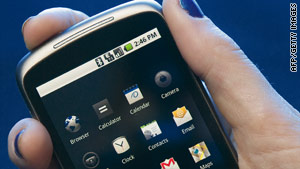



 Unlike other mobile handset vendors, Google offers many other goodies online – search, Google wave, Google Voice, email, and more. So, If their handset is as good as they claim it is, I believe they will significantly shake up the Smartphone business model.
 maybe they send me a free phone?